


1937
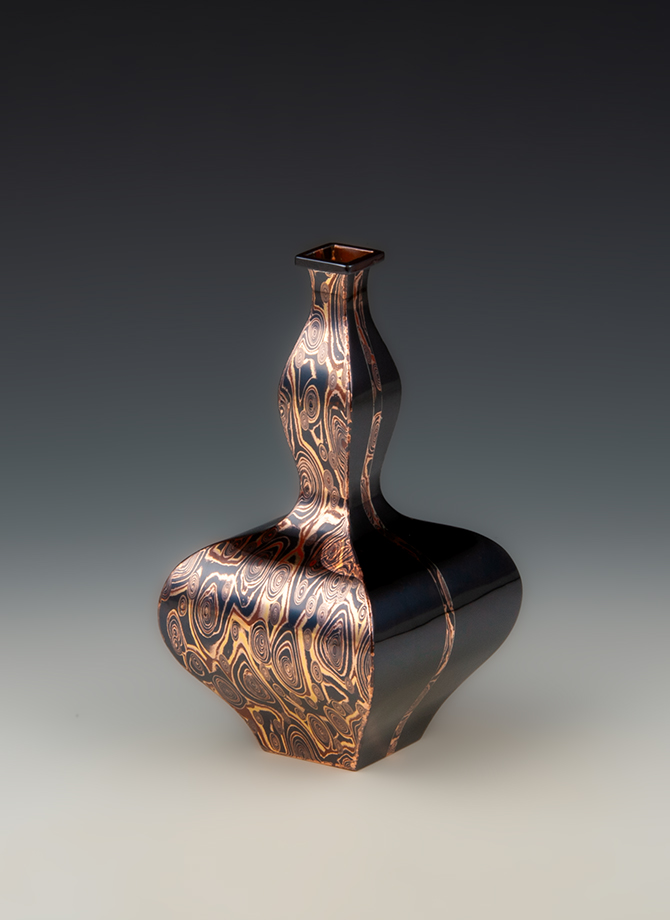
Kin-Gin-Dō Mokume-gane Vase
2024, Gold, Silver, Copper
18 cm
The square-sectioned vase broadly convex above the base. The neck gently rounded and terminating at the top in a sharply profiled, angular rim. The front and back are executed in Kin-Gin-Dō Mokume-gane, while the sides are of shakudō (a copper-gold alloy), each featuring a central vertical band of Kin-Gin-Dō Mokume-gane.
The hyōtan (瓢箪), also known as the bottle gourd, is one of Japan’s oldest symbols of good fortune and blessing. Owing to its numerous seeds, it represents fertility, prosperity and the abundance of life. Its bulbous form is likewise associated with preserving and protecting precious things and is regarded as a vessel for good fortune and positive energy. In Japanese art, the hyōtan therefore frequently appears as a symbol of longevity, good fortune and spiritual protection.
Kin-Gin-Dō mokume-gane (金銀銅杢目金), literally ‘gold-silver-copper wood-grain metal’, is regarded as one of the most demanding techniques in Japanese metal art. The name derives from the three metals used in this particular form of mokume-gane, consisting in equal proportions of pure gold, pure silver and copper.
Around 400 years ago, at the beginning of the Edo period, the technique was used primarily for high-quality sword fittings and samurai armour. Following the decline of the samurai class, the method fell largely into obscurity.
The technique involves bonding layers of gold, silver, copper and traditional Japanese alloys such as shakudō under heat and pressure. Through repeated forging, deformation and controlled removal of the surface, unique patterns resembling natural wood grain are created. Each work thereby acquires a wholly individual surface.
The Akita-based metal artist Bikō Hayashi (b. 1937) devoted more than four decades to researching this lost technique. He was the first to reconstruct both its historical manufacturing process and the composition of the metal alloys employed, subsequently developing the technique for contemporary art. He transferred it from its original context of sword fittings to the creation of vessels, sculpture and independent works of art. In recognition of his contribution to the preservation and further development of Kin-Gin-Dō Mokume-gane, Hayashi was designated a Preserver of Intangible Cultural Heritage by Akita Prefecture.
Hayashi began his training in his father’s workshop at the age of ten. Over the course of several decades, he developed an exceptional mastery of the tankin technique, involving the raising and forging of sheet metal. His work combines the highest degree of technical precision with an organic, sculptural formal language. Plants, buds, blossoms and natural processes of growth serve as points of departure for his highly abstracted and poetic forms.
Hayashi is a member of the Japan Kōgei Association and has received numerous awards at its exhibitions. He has also served for many years as a juror, exhibition organiser and promoter of traditional craft in Akita Prefecture. Among his numerous distinctions are the Akita Cultural Achievement Award, the Japan Kōgei Association Award, the Asahi Shimbun Prize, and honours from the Japanese Ministry of Education.
Through his revival and further development of Kin-Gin-Dō Mokume-gane, Bikō Hayashi occupies a distinctive position within the field of Japanese metal art.


